
Why Your New Truck Grille Doesn’t Fit — Even When It Says It Does
You found the perfect grille.
It says it fits your truck.
You order it… and suddenly nothing lines up.
Mounting points are off. Sensors don’t sit right. The hood won’t close cleanly.
This happens more often than most truck owners expect — and it’s one of the biggest reasons aftermarket grille installs turn into frustration.
At Royalty Core, we’ve seen this problem play out repeatedly. And the cause is almost never what people think.
The Real Problem Isn’t “Fitment” — It’s Assumptions
Most buyers assume:
“If it says it fits my truck, it should bolt right on.”
That assumption is where things go wrong.
Here’s why.
1. Trim Levels Change Everything
Two trucks can look identical and still have completely different front-end configurations.
Common differences that break compatibility:
- Adaptive cruise control sensors
- Front-facing cameras
- Parking sensors
- Tow package variations
- Special edition trims
A grille designed for a base model can easily conflict with these components.
What this causes:
- Sensor interference
- Warning lights on the dash
- Forced modifications just to install
2. “Bolt-On” Doesn’t Always Mean What You Think
A lot of aftermarket listings use the term “bolt-on” loosely.
In reality, that can mean:
- Minor trimming required
- Brackets need adjustment
- OEM components must be removed or modified
That’s not a true bolt-on experience — that’s a partial fabrication job.
3. Manufacturing Tolerance Issues
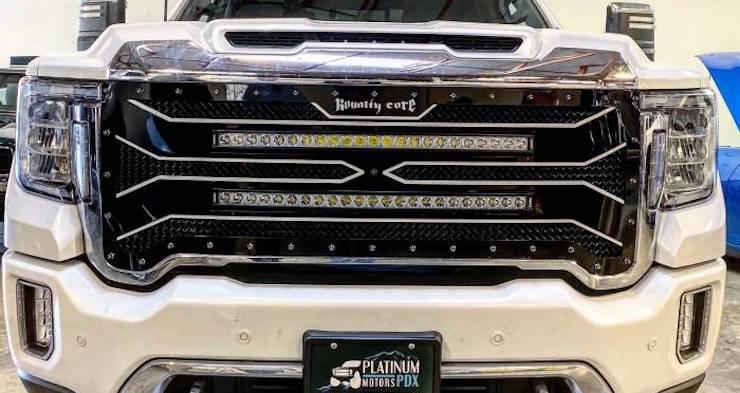
This is where quality really shows.
Lower-end grilles often have:
- Slight dimensional inconsistencies
- Poor bracket alignment
- Flex under installation
Even small deviations create:
- Uneven gaps
- Stress on mounting points
- Long-term fitment issues
This is one of the biggest differences between mass-produced imports and precision-built grilles.
4. Airflow and Functional Design Conflicts
Fitment isn’t just about mounting.
It’s also about:
- Radiator airflow
- Intercooler exposure
- Engine cooling
A poorly designed grille can:
- Restrict airflow
- Increase engine temps
- Affect performance under load
Most buyers don’t think about this — until it becomes a problem.
5. The “Universal Fit” Trap
If you see:
“Fits multiple years and models”
That’s a red flag.
True precision fitment is:
- Year-specific
- Model-specific
- Trim-aware
The broader the compatibility claim, the more compromises are involved.
How to Avoid These Problems Before You Buy
If you want to avoid a failed install, check these first:
✔ Confirm exact year, make, model, and trim
Not just “F-250” — but the exact configuration.
✔ Verify sensor compatibility
Look for explicit support for:
- Cameras
- Radar sensors
- Parking systems
✔ Look for real install documentation
Not marketing copy — actual install detail.
✔ Pay attention to build quality
Material thickness, weld quality, and bracket design matter more than aesthetics.
Why Build Quality Changes Everything
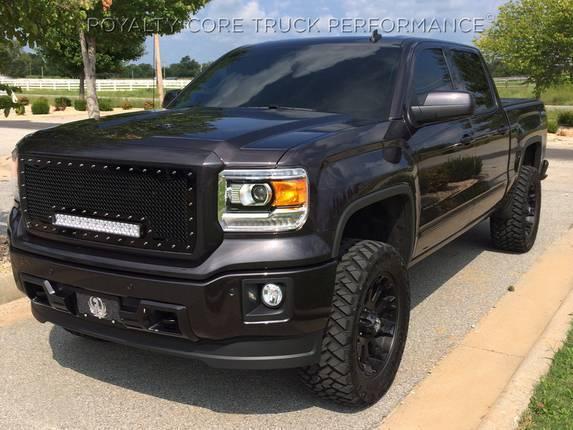
At Royalty Core, our approach is different from mass-produced alternatives.
Our grilles are designed with:
- Precision alignment for OEM mounting points
- Trim-specific compatibility considerations
- Structural rigidity to prevent flex during install
- Functional airflow design — not just appearance
That means fewer surprises when it’s time to install.
The Bottom Line
Most grille fitment problems aren’t bad luck.
They’re the result of:
- Overly broad compatibility claims
- Loose manufacturing standards
- Missing vehicle-specific considerations
If you choose the right grille — built for your exact truck — the install should feel straightforward, not like a workaround.
Ready for a Proper Fit?
Explore grilles engineered for true fitment and clean installation:
???? Shop Royalty Core Grilles Built for Exact Fit